
For many years, Customer Relationship Management (CRM) has been regarded as the backbone of sales operations in modern enterprises. CRM systems help organizations manage leads, track opportunities, and control sales pipelines in a structured and measurable way. However, in today’s increasingly competitive markets—where products, features, and pricing models can be rapidly replicated—sustainable competitive advantage no longer lies merely in the ability to sell, but in the ability to understand customers more deeply and serve them better than competitors.
It is precisely at this intersection that the integration of CRM and customer support systems, commonly referred to as Helpdesk solutions, becomes strategically critical. When deployed within a comprehensive digital transformation platform such as Odoo, the combination of CRM and Helpdesk represents not only a technological integration but a fundamental shift in business philosophy: from transaction-oriented sales to experience-driven customer engagement.
A digital transformation platform is not simply a collection of standalone modules. It is designed as a unified ecosystem in which data flows seamlessly across departments. Within this ecosystem, CRM and Helpdesk play central roles in managing the entire customer lifecycle—from initial contact and sales engagement to post-sale support and long-term relationship maintenance. The integration of these two modules enables organizations to move beyond fragmented customer data and toward a holistic, end-to-end understanding of customer value.
CRM: A Structured Foundation for Sales Management
The CRM module is designed to standardize and optimize the entire sales process. It enables organizations to manage leads, opportunities, sales pipelines, follow-up activities, meetings, phone calls, and all interactions related to customer acquisition and conversion. Through a visual and structured pipeline mechanism, CRM allows sales teams to clearly understand the status of each opportunity, assess conversion probabilities, and allocate resources more effectively.
More importantly, CRM systems do not merely store static customer information. They capture a continuous history of interactions between the customer and the organization, forming the basis for behavioral analysis and predictive sales insights. This historical interaction data allows sales teams to understand patterns, anticipate needs, and tailor engagement strategies accordingly.

However, when CRM data is limited to pre-sale and in-sale stages, the customer picture remains incomplete. Critical information generated after the sale—when customers begin using products or services and encounter real-world challenges—often remains outside the scope of traditional CRM usage. This limitation significantly reduces the strategic value of CRM as a decision-support tool.
Helpdesk: Post-Sales Data That Is Often Overlooked but Strategically Valuable
The Helpdesk module is designed to manage customer support requests, complaints, and operational issues through a structured ticketing system. Each ticket records detailed information about the customer’s issue, response time, assigned personnel, priority level, and resolution status. In addition, Helpdesk systems support Service Level Agreement (SLA) management, performance measurement of support teams, and evaluation of customer satisfaction.

In many organizations, Helpdesk data is used primarily for operational purposes—such as measuring response times or evaluating service quality. However, from a strategic perspective, this data represents a highly valuable source of customer insight. According to Odoo’s integrated approach, customer support data is not “closed” or isolated; it is an essential component of the overall customer profile.
Information such as recurring issues, customer reactions to service quality, and the complexity of product usage provides deep insight into customer needs, expectations, and pain points. When properly analyzed, this data can directly inform sales strategies, product improvements, and customer retention initiatives.
When CRM and Helpdesk Are Separated: A Critical Knowledge Gap
In many organizations, CRM is owned by the sales department, while Helpdesk is managed by technical support or customer service teams. These systems often operate in parallel, with limited or manual data exchange. As a result, sales representatives frequently lack visibility into the issues their customers are experiencing, while support teams remain unaware of the commercial context and long-term value of each customer.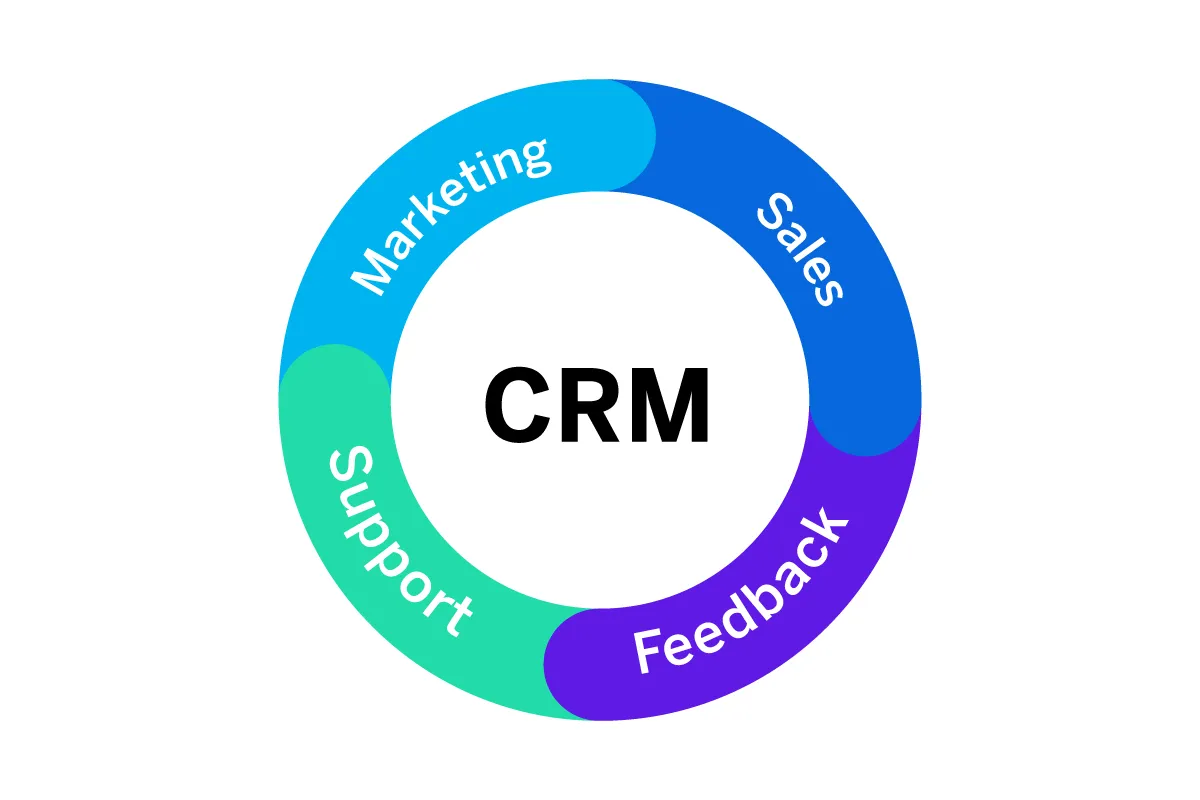
This information gap leads to several negative consequences. Sales teams may approach customers at inappropriate times, propose solutions that are misaligned with the customer’s current experience, or overlook sales opportunities embedded within support interactions. Over time, such misalignment erodes customer trust and directly impacts customer retention and revenue growth.
CRM–Helpdesk Integration: Building a Unified Customer Profile
Odoo is built on an all-in-one architecture in which modules share a common database and are tightly interconnected. When CRM and Helpdesk are deployed within the same system, customer information is shared in real time between the two modules. A support ticket can be directly linked to a customer record, a contract, or even a specific sales opportunity within CRM.
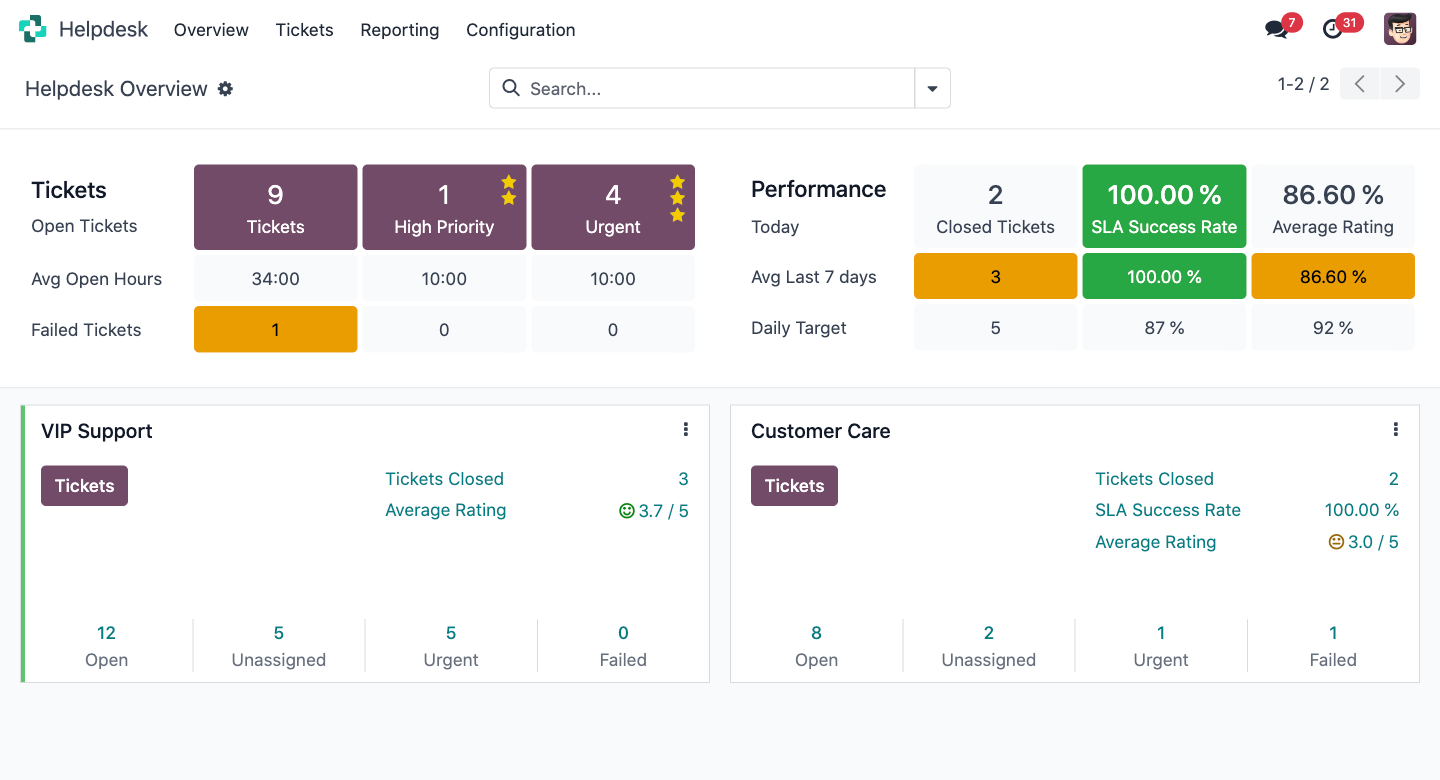
A particularly powerful feature is the ability to convert a support ticket into a sales opportunity when a commercial need is identified. This functionality reflects a core principle of Odoo’s design philosophy: every customer interaction has potential business value if properly recognized and leveraged. When a ticket is converted into an opportunity, the complete support history is preserved and becomes contextual information for the sales team, enabling more informed and relevant engagement.
Support Tickets as a High-Reliability Source of Sales Intelligence
Unlike traditional leads generated through marketing campaigns, support tickets reflect real and immediate customer needs. When customers submit a support request, they are actively engaging with the organization, often providing detailed descriptions of their challenges, expectations, and usage contexts. These interactions offer insights that are difficult to obtain through conventional sales or marketing channels.
When CRM and Helpdesk are integrated, sales teams can identify behavioral patterns such as frequent support requests related to specific features, limitations of current service packages, or signals indicating readiness for expansion or upgrades. These insights enable sales representatives to proactively propose upgrades, additional services, or alternative solutions based on concrete usage data rather than assumptions.
Direct Impact on Sales Team Performance
The integration of CRM and Helpdesk fundamentally transforms the way sales teams operate. Instead of focusing solely on pipelines and revenue targets, sales representatives gain a comprehensive view of the customer journey. They understand when to engage, when to pause, and how to approach customers in a way that aligns with their emotional state and recent experiences.
Empirical observations from integrated CRM environments consistently indicate that closing rates improve significantly when sales teams have access to post-sales support data. In this context, CRM evolves from a transactional tracking tool into a strategic decision-support platform that enhances the quality and effectiveness of every customer interaction.
Enhancing Customer Experience and Customer Lifetime Value
One of the most significant benefits of CRM–Helpdesk integration is the ability to deliver a consistently positive customer experience. Customers no longer need to repeat their issues across multiple departments, and they perceive a coherent and empathetic organization that understands their history and context. When sales representatives are aware of prior support interactions, they can tailor their proposals appropriately and avoid insensitive or mistimed offers.
From a strategic standpoint, this integration shifts organizational focus toward Customer Lifetime Value (CLV) rather than one-time transaction revenue. Retention, service expansion, and long-term relationship building become core objectives of the sales function, supported by accurate and comprehensive customer data.
Managerial and Strategic Implications for Leadership
At the managerial level, integrated CRM and Helpdesk data enables leadership to analyze the relationship between service quality and business performance. Organizations can assess how response times affect repeat purchases, identify high-value customers who require extensive support, and design differentiated service and pricing strategies accordingly.

Furthermore, operating on a unified digital platform reduces IT complexity, lowers operational costs, and enhances data transparency and governance. These benefits are particularly critical for organizations undergoing rapid growth or pursuing enterprise-wide digital transformation initiatives.
Conclusion
The integration of CRM and Helpdesk modules represents more than a technological solution; it embodies a strategic approach to customer management and business development. By connecting sales data with support data, organizations gain deeper customer insight, make more precise decisions, and build stronger, more sustainable customer relationships.
In an era where customer experience is a decisive factor for success, organizations that harness the synergistic power of CRM and Helpdesk will cultivate sales teams that are not only strong in revenue generation but also superior in strategic thinking and customer-centric capability.